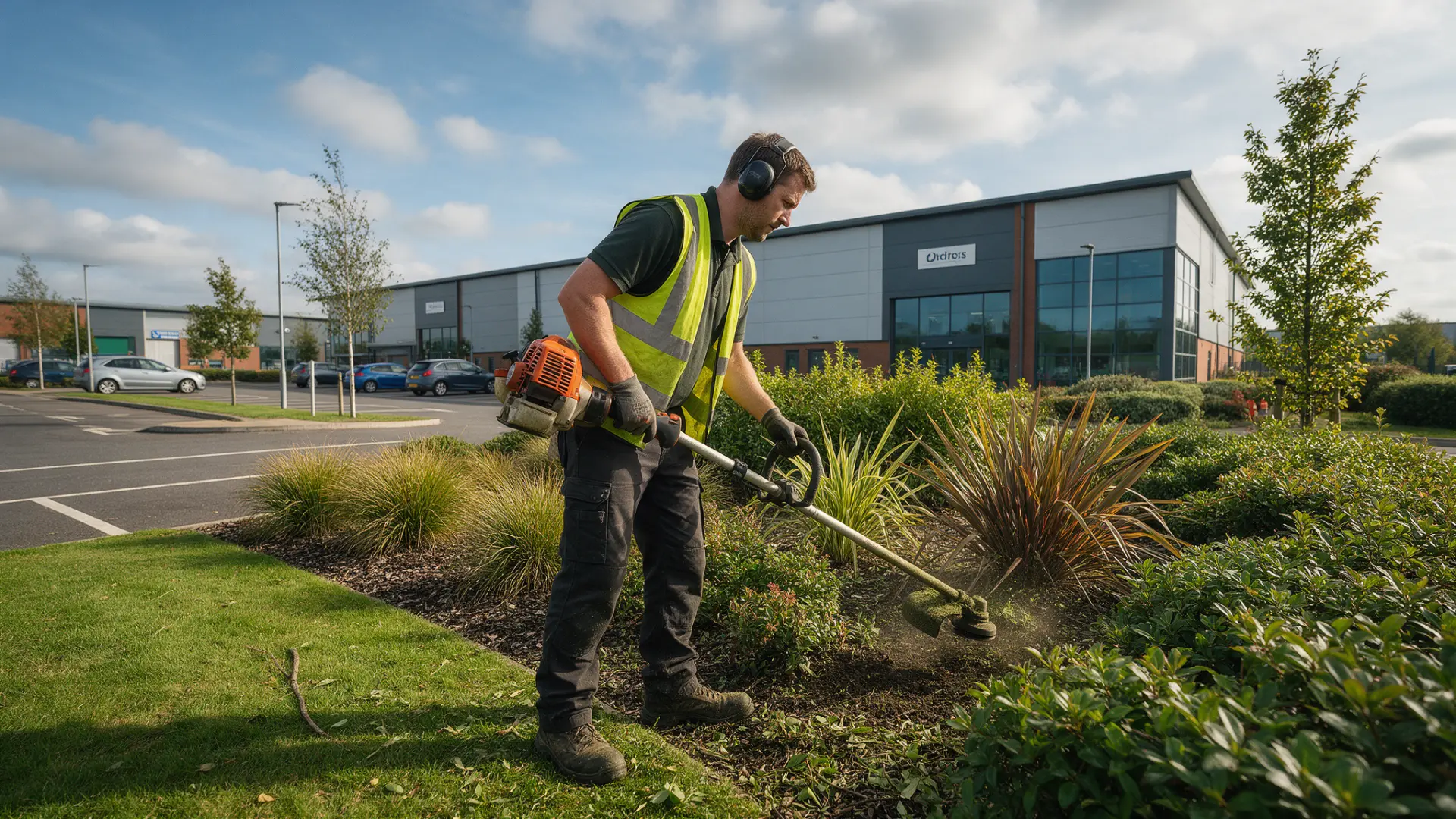
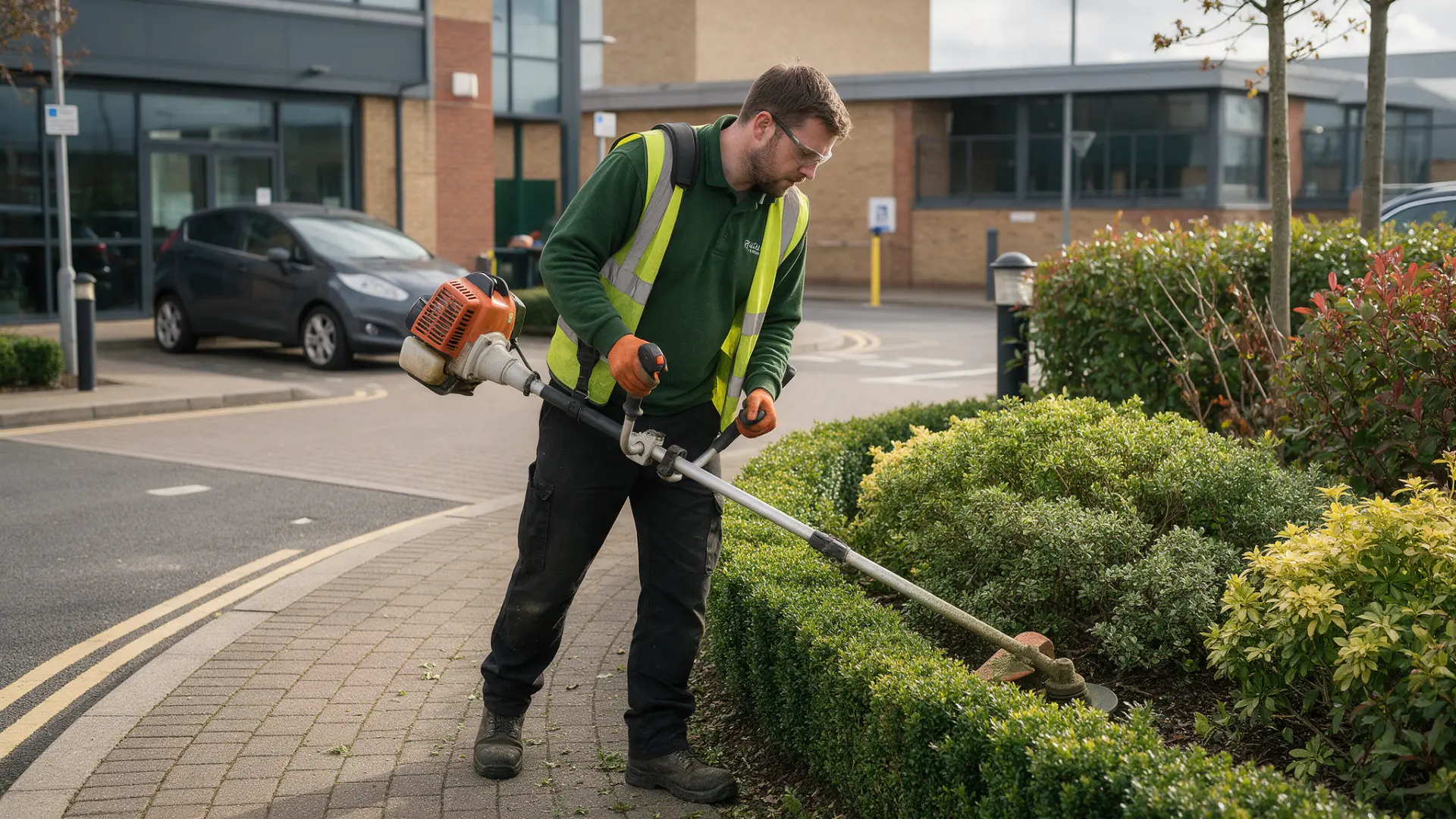
Commercial landscaping mistakes often begin with a reasonable intention: make the property look tidy, reduce expenditure or resolve a complaint quickly. Problems arise when the chosen action overlooks the cause of the issue or the requirements of the planting.
For managers of offices, shared premises and business grounds, recognising these patterns can prevent repeated repairs and protect a more consistent appearance without continually increasing the workload. Record recurring defects before revising the maintenance brief.
Applying one maintenance regime everywhere
A uniform approach is easy to describe, but it ignores important differences across the site. A sunny reception bed, shaded boundary and lawn used as a shortcut face different pressures. Giving all three the same watering, mowing or planting instructions can waste effort while leaving the most demanding area without the attention it actually needs.
Map distinct zones and explain the purpose of each. When foot traffic causes the damage, repairing grass without addressing the route may simply repeat the problem. Where shade limits growth, investigate whether the planting suits the location. Choose the response according to the condition and use of the area rather than convenience alone.
Equating neatness with ecological quality
JNCC’s latest available UK pollinator indicator covers 393 bee and hoverfly species, with data to 2024. It records a 23% decrease in the composite distribution indicator between 1980 and 2024. This measures distribution, not a count of all insects, and is an official statistic in development with modelling limitations. Source: JNCC, Status of pollinating insects.
The practical response is to make room for habitat deliberately where it suits the property. Removing every flower from every peripheral area solely for uniformity can conflict with that aim. Defined habitat areas, maintained edges and a simple explanation for occupants can help varied grounds look intentional. Agree those areas in the specification so they are not accidentally treated as neglected patches.
Putting mulch against trunks and stems
Mulch can be useful, but placement matters. The RHS advises keeping it clear of woody stems, where contact can cause problems. A mound piled against a tree trunk should not be taken as evidence of better care. Source: RHS, Mulches and mulching.
Agree the intended coverage before material arrives and inspect the finished bed. Focus on plant condition and the purpose of the treatment rather than the amount supplied. If an area repeatedly needs topping up, investigate where material is going and whether other maintenance operations are disturbing it. More material is not automatically the correct remedy.
Cutting every hedge on the same date
Pruning timing depends on the plant and the intended result. RHS guidance distinguishes formal hedge maintenance from informal and flowering hedge care. One convenient appointment does not necessarily suit every hedge on a commercial property. Source: RHS, Pruning hedges.
Keep an identification record for significant planting and describe the shape or outcome required. When a flowering display disappoints, review the pruning history before replacing the plants. Ask the contractor to check relevant constraints before cutting. Resolve uncertainty about identification rather than applying an identical treatment to everything that happens to grow along a boundary.
Approving planting without establishment care
An attractive installation can fail to meet expectations when nobody has accepted responsibility for its establishment. Include the requirements after planting in the purchase decision, covering moisture checks, monitoring and access. Leaving these arrangements until plants struggle can turn a manageable handover into a dispute over who should put the problem right.
Ask how the scheme will be cared for within the available budget. Consider mature size, proximity to paths and the space needed to work around the plants. An inexpensive installation may become expensive to maintain. Record the agreed aftercare, identify who reports concerns and review progress while corrective action remains straightforward.
Counting attendance without checking outcomes
Visit records establish whether appointments happened, but they do not show whether the landscape is improving. Repeated complaints about weeds, hidden signs or worn turf need investigation even when every visit took place. Look for defects returning in the same locations and ask whether the current brief addresses the cause.
A useful assessment combines dated photographs, a defect record and decisions about priorities. Separate routine care from one-off correction and possible redesign. To discuss a maintenance arrangement that addresses recurring issues, explore contact us for contract landscaping in Cirencester. Bring specific examples so the proposed scope responds to the property’s problems rather than repeating a generic list of tasks.