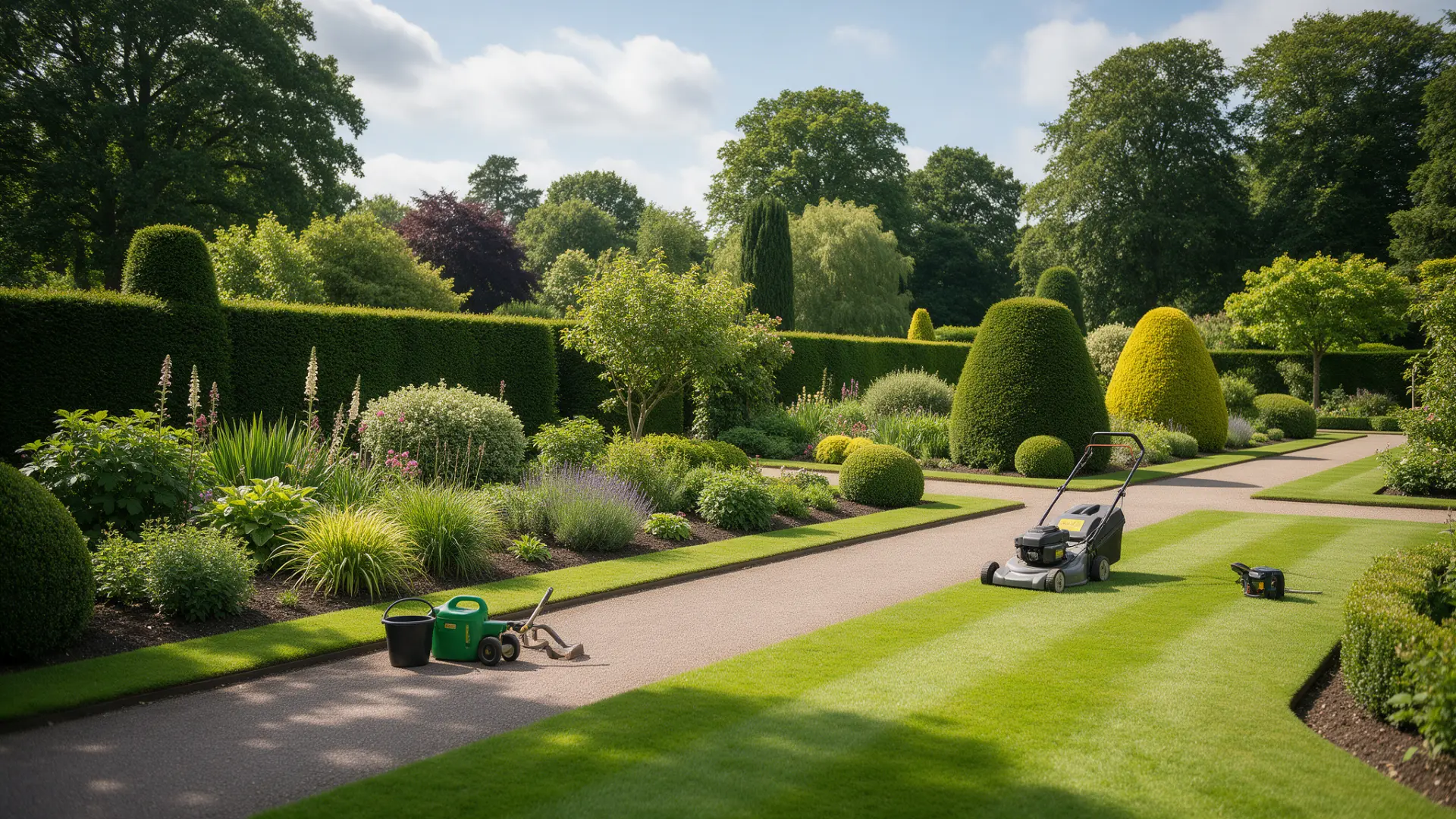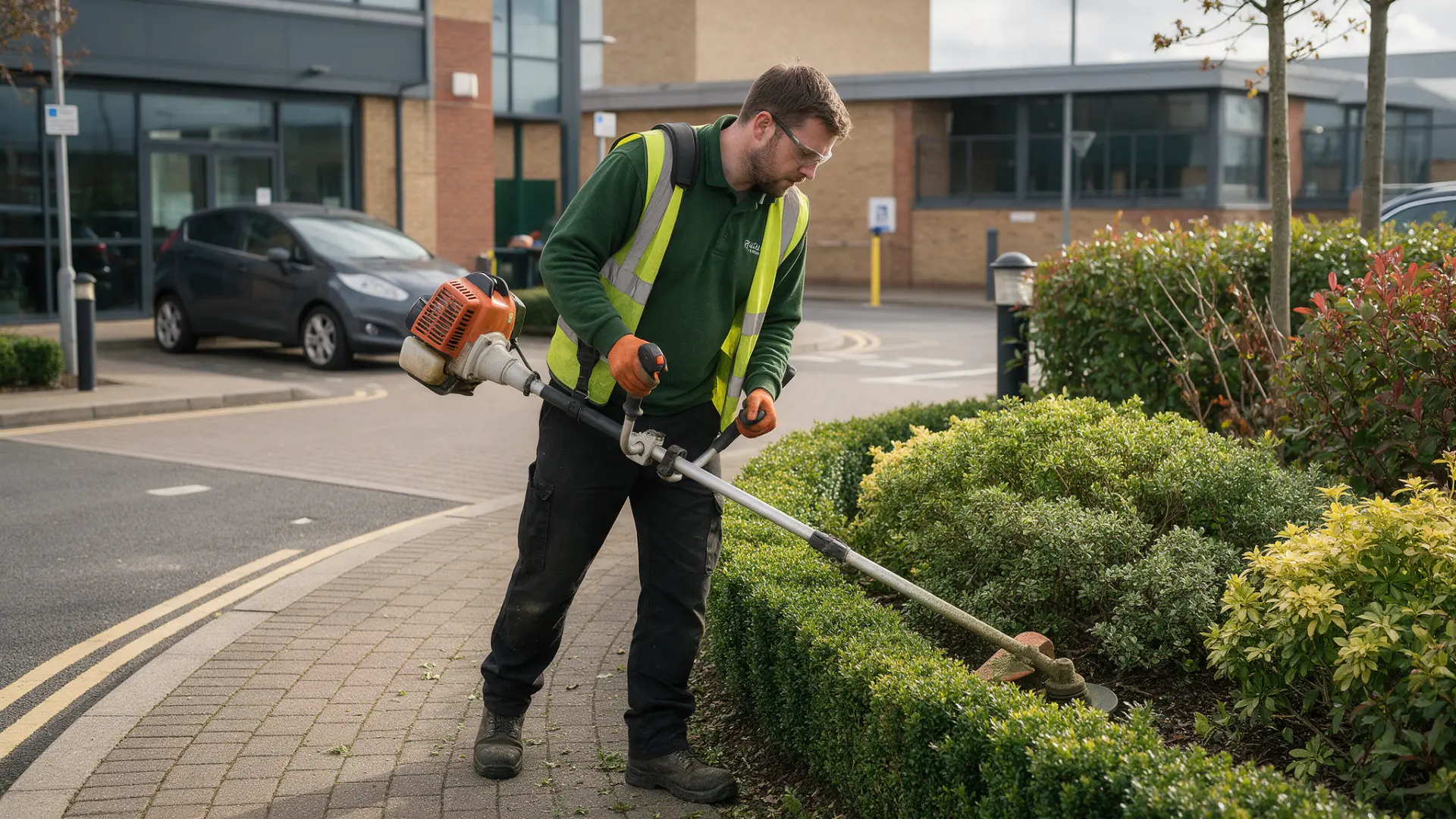

Curb appeal, commonly called kerb appeal in the UK, is the impression a property makes before a visitor reaches the door. Landscaping contributes through clear routes, balanced planting and a well-kept frontage. For commercial premises, a successful scheme supports the visitor’s journey as well as the building’s appearance. It should help people understand where to go and make the outdoor environment more pleasant to use. When reviewing commercial premises, start with the views visitors see on arrival.
Assess the frontage from a visitor’s viewpoint
Approach the premises from the road, parking area and pedestrian route. Note where the entrance becomes visible and whether plants obscure signs or cause uncertainty. Consider views from seated as well as standing eye level. Even an impressive border offers limited practical benefit when it hides the information visitors need to find the correct door.
Photograph these approaches before commissioning changes. The images can reveal where a modest intervention would have more impact than replacing the whole landscape. Improving a neglected arrival area may deserve priority over adding ornament elsewhere. Judge proposals against the journey people actually make rather than solely against a drawing viewed from above.
Create order around entrances and boundaries
Consistent edges and deliberate groups of plants can make a busy frontage feel organised. Choose a limited design vocabulary that suits the building rather than adding unrelated features whenever a space appears. Beds, containers and boundary planting should work together, allowing room for future growth and access for the people maintaining them.
Balance vegetation with visibility. A hedge can soften a boundary, but its maintained dimensions should suit nearby routes and signage. Consider the scene through winter, not only during flowering periods. A coherent setting gives each element a clear role and helps the property retain a considered appearance when seasonal displays have finished.
Think about comfort as well as decoration
The ONS UK natural capital accounts, published in December 2025, valued nature’s urban heat-regulating service in Great Britain at £486 million for 2024, compared with £1,016 million for 2023. These wider-scale estimates concern avoided heat-related costs, not savings forecast for an individual premises. Source: ONS, UK natural capital accounts 2025.
The broader design implication is that planting can contribute more than colour. Consider the places where people wait, sit and walk when discussing the landscape. Larger planting and trees require enough space and suitable long-term management. An attractive entrance should remain useful as the scheme matures, rather than becoming difficult to navigate or care for.
Select plants that can sustain the intended look
Choose plants for their suitability to the location before judging them by colour alone. Exposure, light, soil conditions and watering arrangements all influence whether the intended display can be maintained. A scheme that impresses on installation day but struggles within the available resources may soon undermine the presentation it was meant to improve.
Plan continuity between flowering periods and allow for mature size. Seasonal displays can be worthwhile where their purpose and upkeep budget are clear. Other areas may benefit from a more stable planting framework. Ask how the frontage will look after flowers fade so the overall impression does not depend on one brief moment in summer.
Include maintenance in the design decision
Examine how crews will reach beds, manage edges and remove arisings without obstructing visitors. Small decorative pockets surrounded by obstacles can demand disproportionate attention. Providing practical access helps support consistent presentation within the budget and reduces the likelihood that awkward corners will receive less care than more accessible parts of the grounds.
Agree responsibility for litter, failed plants and damage between scheduled appointments. Give reception or facilities staff a clear way to report defects. A minor problem can remain conspicuous for days when nobody knows who should act. Ownership of these everyday details helps protect the investment in the scheme after installation work is complete.
Measure visible progress without assuming sales gains
Take comparison photographs from fixed positions at similar times of day. Ask occupants whether the entrance is easier to find and outdoor areas feel better maintained. Track issues such as hidden signage, complaints and plant replacements. These observations provide a more useful measure than a claim that every landscaping improvement automatically increases revenue.
Commercial landscaping can support a positive impression, but a particular uplift in sales or property value cannot be inferred from national environmental accounts. Set goals your property can demonstrate. To explore frontage care and a manageable landscape, visit our commercial landscaping service page in Cirencester. Bring photographs of the arrival route and explain the impression you want the premises to make.