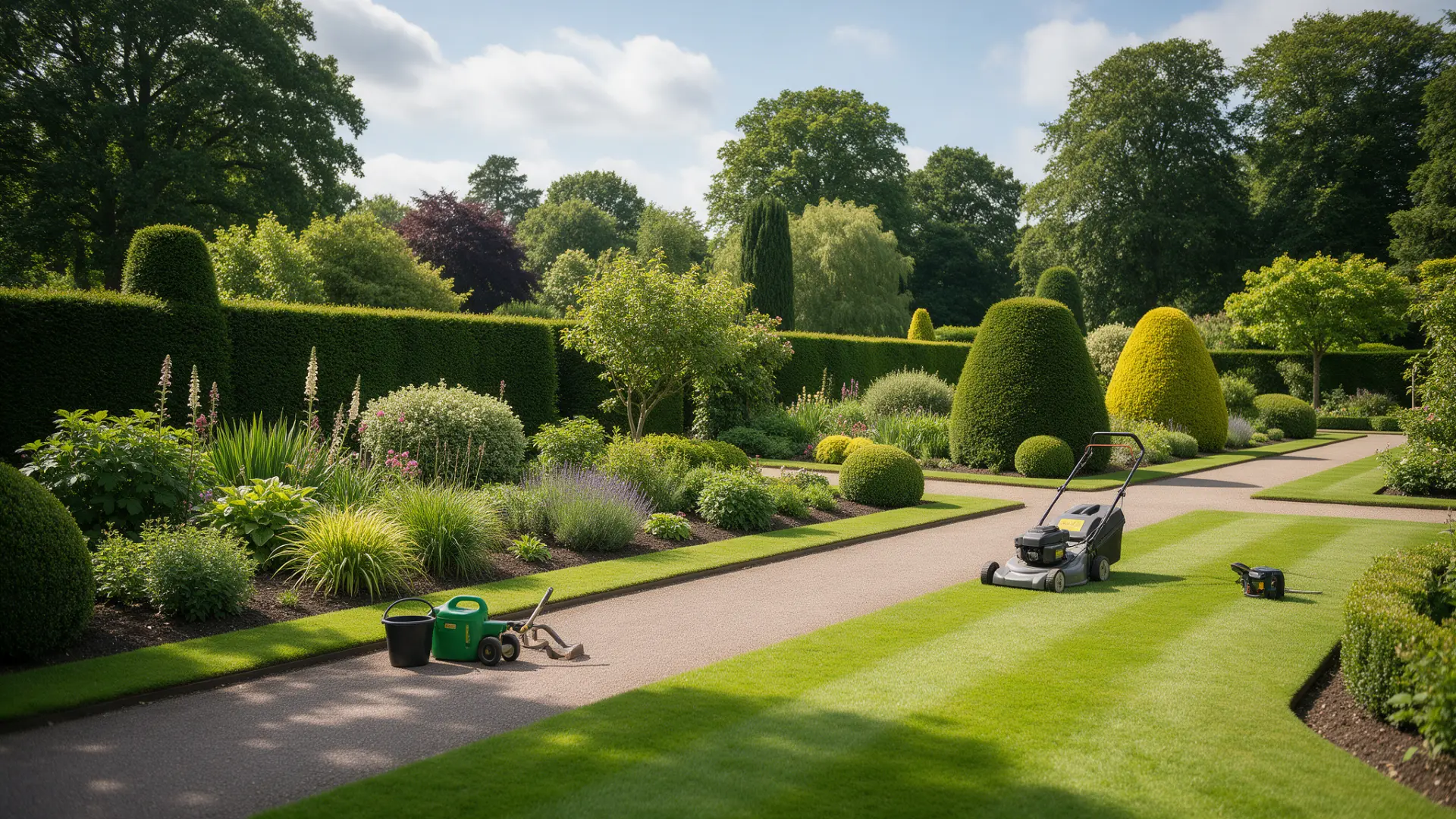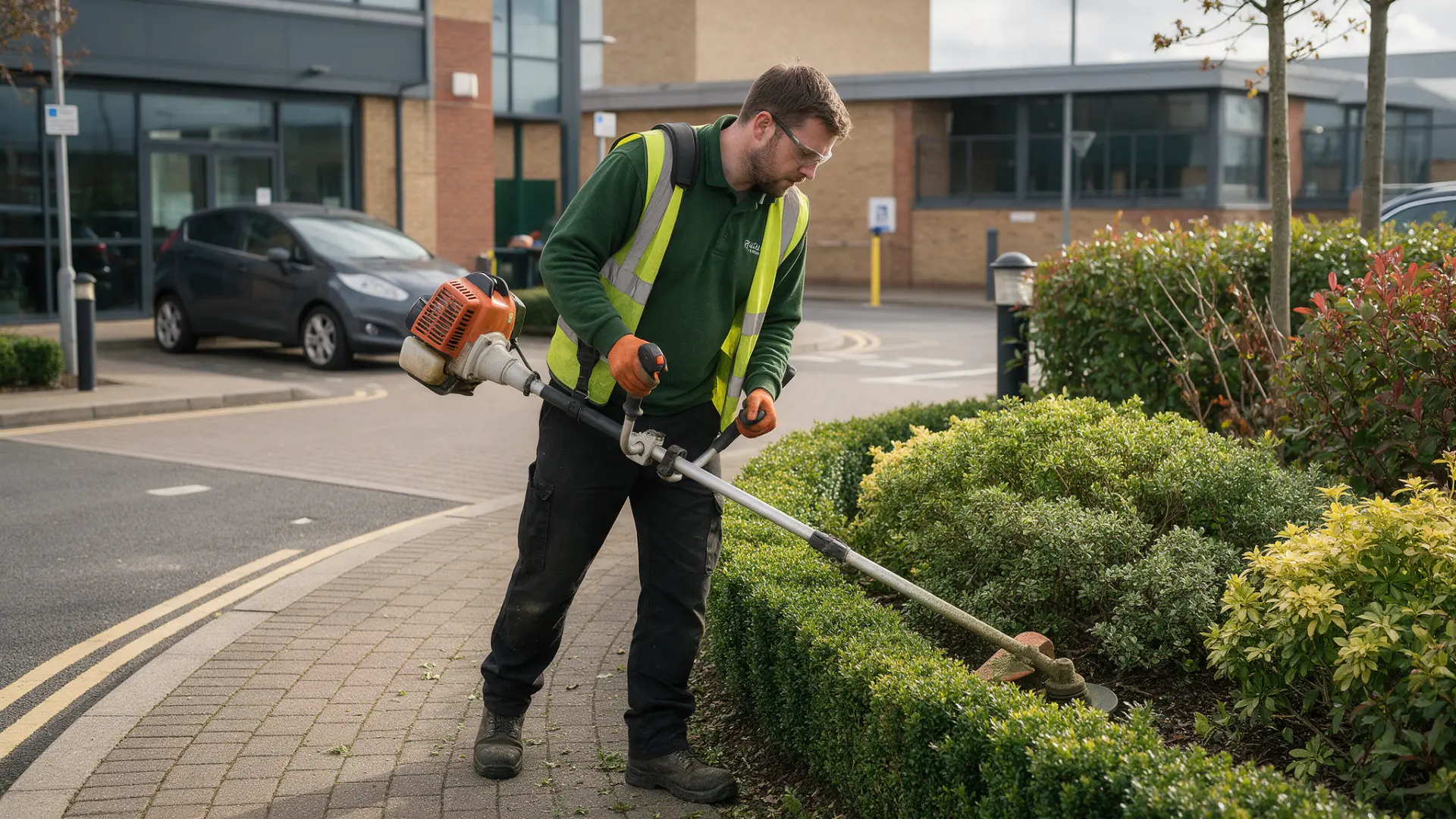

A commercial landscape maintenance plan connects the condition of the grounds with the way a property operates. It explains what needs attention, who is responsible and how priorities change through the year.
For offices, business parks and managed premises, planning involves more than booking regular mowing. Entrances, planted areas, pedestrian routes and quieter boundaries all need a place in the schedule. Use this framework when comparing maintenance arrangements for premises.
Start with a site inventory and clear outcomes
Walk the grounds with the person responsible for the property. Record lawns, beds, hedges, trees, paved routes and irrigation equipment. Mark delivery entrances, emergency access and places where staff gather. Photographs and an annotated map help explain the scope, especially when responsibility is shared between a tenant and a landlord. Identify existing defects before the contract starts.
Set an outcome for each part of the site. A reception frontage may need a formal finish, while a quieter perimeter can support a different mowing regime. Define what an acceptable result looks like rather than relying on the word tidy. Include any access restrictions and distinguish maintenance from repairs to longstanding damage.
Build weather flexibility into the calendar
The Met Office’s State of the UK Climate 2025 report, published in July 2026, found that the decade 2016–2025 was 0.51°C warmer than 1991–2020. Its October-to-March half-year was also 3% wetter than that baseline. These UK figures support planning for variable conditions; they do not predict weather at an individual property. Source: Met Office, State of the UK Climate 2025.
Use the seasons as planning windows, then adjust timing to actual growth and ground conditions. Record which tasks can move when soil is saturated and which inspections must continue. Agree an alternative work list so unsuitable mowing conditions do not make an entire visit unproductive. Explain how deferred work will be rescheduled.
Separate recurring visits from annual operations
Routine visits might include litter collection, cutting grass and attending prominent borders. Annual operations could cover planned hedge work, mulch replenishment or renovation of worn lawn areas. Keep these categories separate in the specification. Otherwise a comprehensive-sounding monthly payment can conceal jobs that nobody has allocated enough time to complete.
Give newly installed planting its own establishment schedule. Recently planted beds have different requirements from mature shrubs. Assign responsibility for moisture checks, reporting losses and reviewing supports where relevant. When installation and maintenance involve different contractors, arrange a handover that identifies the plants, outstanding issues and agreed aftercare obligations.
Assign ownership and agree useful reporting
Name someone who can approve changes and a contact for site access. Explain working hours, parking, key collection and the procedure for reporting defects. Where several occupiers use the grounds, a single instruction route helps prevent conflicting requests. Account for deliveries, public events and periods when noisy work would disrupt the business.
Keep visit records short and practical. They should identify areas attended, work completed, tasks postponed and problems requiring a decision. Photographs can make an emerging issue easier to assess. Agree a separate escalation process for urgent concerns so they do not remain unnoticed in a routine report until the next review.
Distinguish maintenance spending from improvements
Allocate routine care, occasional specialist work and landscape improvements to separate budget lines. Redesigning an entrance is a different decision from maintaining an existing bed. This separation helps managers understand what the contract covers and prevents an improvement project from quietly consuming the funds intended for continuing care.
Approve additional work against a written description of the problem, proposed result and assumptions about access or disposal. Set contingency according to the property’s risks rather than an arbitrary universal percentage. Review recurring extras: repeated repairs in the same place may show that the specification or landscape design needs changing.
Review results and prepare the next year
At quarterly reviews, compare photographs from consistent positions and check whether agreed tasks were completed. Consider recurring complaints, plant losses, interruptions to access and deferred work. These observations reveal more than counting visits alone. Frequent attendance is useful only when it achieves the outcomes the property needs.
Use the year-end review to adjust priorities, timing and responsibilities. If turf repeatedly fails along a shortcut, consider the route itself before ordering another repair. For help discussing a suitable maintenance scope, call Ideal Swindon for commercial landscaping in Gloucestershire. Bring the site map, operational priorities and examples of recurring problems to the initial conversation.